

The Rotary Club of New Kingston (RCNK) recently hosted its third annual "Great Debate" on 15 August 2025, with the moot "Be it resolved that the survival of Rotary depends on prioritizing the recruitment of young professionals."
The Rotary Club of New Kingston (RCNK) recently hosted its third annual "Great Debate" on 15 August 2025, with the moot "Be it resolved that the survival of Rotary depends on prioritizing the recruitment of young professionals."
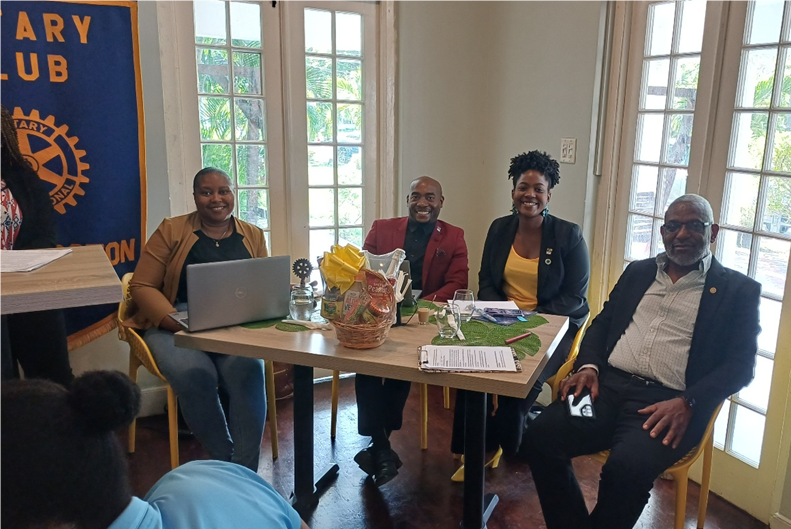
The event saw the proposing team, led by Past President Julie Ramchandani and including Rtn Michael Stanbury, Past President Neville Graham, and Rtn Diego Thomas, go head-to-head with a formidable opposing team led by President Alex Robinson, with Rtns Marshalee Hutchinson, Nicola Thompson, and Past President John Lindo.
The proposition's case rested on three main points: the demographic crisis, the need for modern skills and relevance, and the securing of continuous leadership. Past President Ramchandani highlighted that Rotary International’s own statistics show that only 5% of members worldwide are under the age of 40, a demographic imbalance that she called a "time bomb" threatening the organization's future. She argued that without a deliberate effort to bring in younger members, Rotary risks a "silent collapse" and a slow fading away. She also noted that RCNK itself has seen success from this approach, with 50% of the club's members being under 40, having joined within the last 10 years.
The proposing team also contended that younger professionals bring crucial modern skills in social media, digital fundraising, and virtual collaboration, which are all essential for modern nonprofits. They also stated that these younger members are engaged in emerging global causes like climate change and mental health, helping to keep Rotary relevant. Ramchandani stated that while 70% of under-40s want to volunteer, they are looking for flexibility, hands-on impact, and digital connection.
In response, the opposing team presented several arguments against the proposition. They argued that "survival" is too strong a word, noting that Rotary has weathered demographic shifts for over a century without making youth recruitment its primary strategy. The opposing team also emphasized that experienced members provide invaluable assets, including established networks, financial resources, and institutional knowledge. They argued for a more nuanced approach, suggesting that a mix of generations is more sustainable and that quality and commitment matter more than age. The opposing team concluded that the recruitment of young professionals is "necessary but not a sufficient requirement for the survival of our organization".
Both teams acknowledged the importance of a balanced, intergenerational approach, with the proposition stating that the wisdom of senior members is "priceless" and the opposition emphasizing that a multigenerational membership creates unique value.
However, the proposing team's final argument, using an analogy of a sinking ship, convinced the judges that a focused effort on the "leak" of young member absence was necessary for the organization's future. Past President Ramchandani concluded by stating that prioritizing young professionals will provide decades of service, infuse modern skills, and keep Rotary relevant to the world it serves.
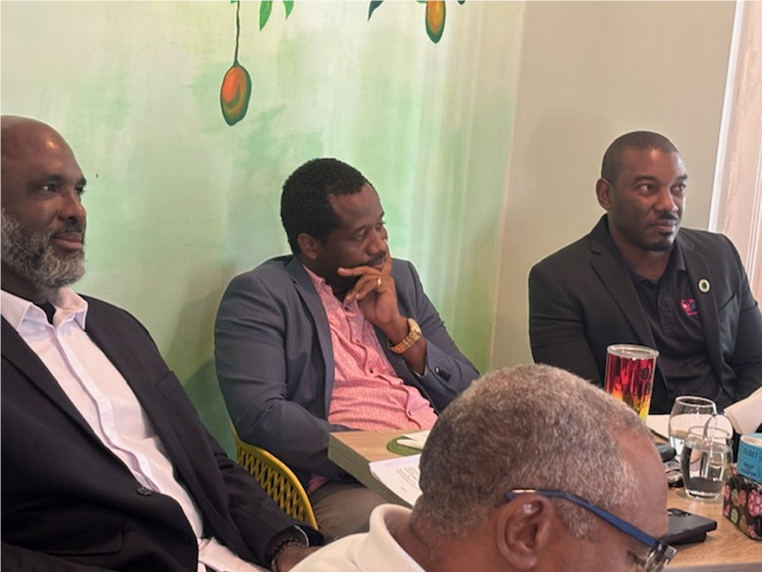
Members of the winning team: L_R Rtns Michael Stanbury, Neville Graham, Diego Thomas
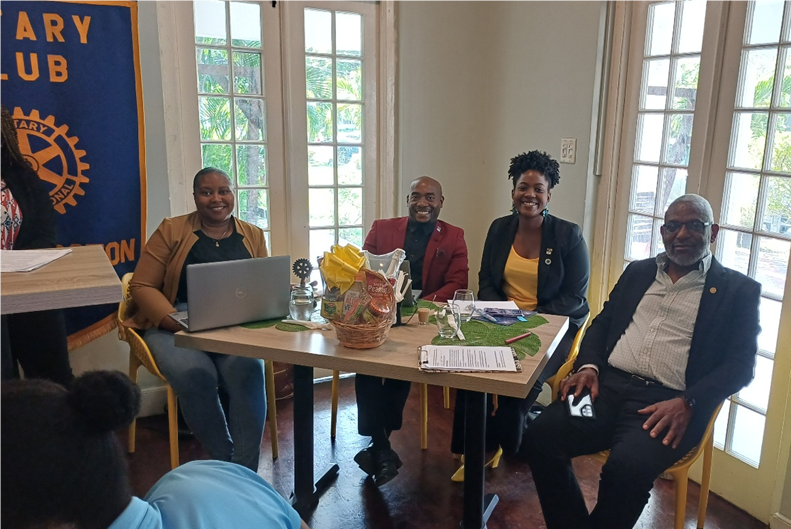
The Opposers: Rtns Nicola Thompson, Alex Robinson Marshalee Hutchinson John Lindo
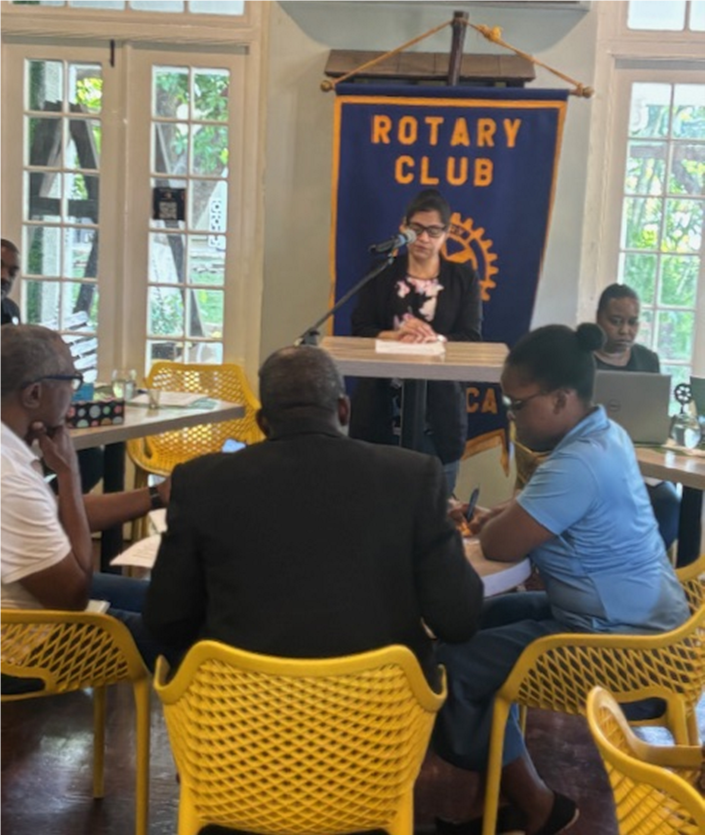
First Speaker for the proposition: PP Julie RamchandaniMembers of the winning team: L_R Rtns Michael Stanbury, Neville Graham, Diego Thomas
The Opposers: Rtns Nicola Thompson, Alex Robinson Marshalee Hutchinson John Lindo